Closed guard vs open guard
In closed guard your ankles are locked behind the other person's back; in open guard they are not. Both keep your legs between you and them.
Guard: you are on your back or seated, with your legs between you and the other person. Posture: how straight and balanced their back and head are. Connection: your feet or grips touch them and control them.
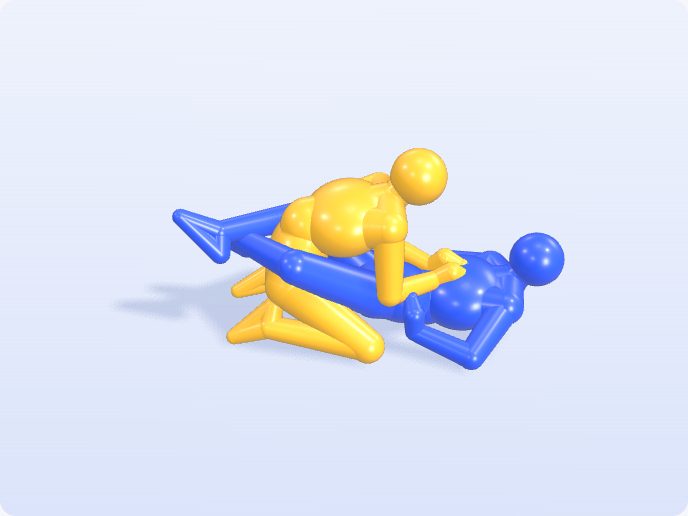
 Closed GuardLook at the ankles: they are locked behind the other person's back.
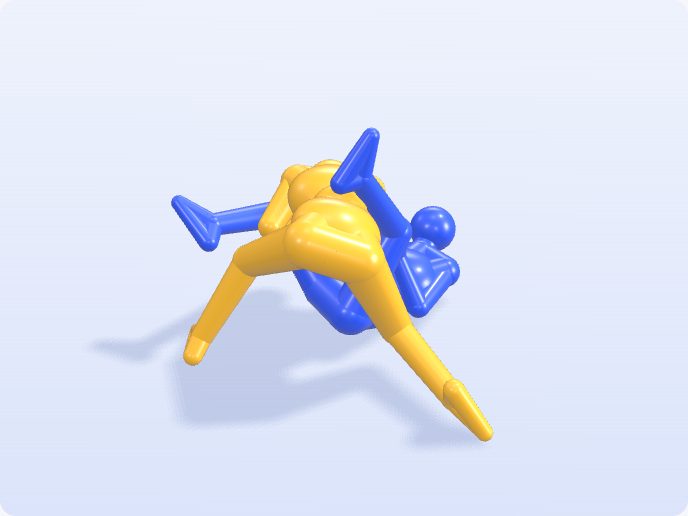
 Open GuardLook at the legs: no lock, so the feet push and hook instead.
Side by side
| What to look at | Closed guard | Open guard |
|---|---|---|
| Your legs | Ankles locked behind their back | No lock. Feet, knees and shins push and hook. |
| Where they are | Usually on their knees | Often standing, or moving around your legs |
| What you control | Their hips and posture | The distance between you |
| Main goal | Break their posture, then sweep or submit | Keep connection with grips and feet, then sweep |
| Examples | Closed guard is one guard. | Butterfly, De la Riva, spider, sit-up guard and more |
| Common mistake | Lying flat and just holding them. Pull their posture down and move your hips. | No connection. When nothing touches them, the pass has started. |
When to use which
- They kneel in front of you: closed guard is a good start.
- They stand up and you cannot keep your ankles locked: open your legs and play open guard.
- You are new to BJJ: closed guard is a good first guard. Your locked ankles hold them in place.
Your partner kneels in your closed guard. They stand up and push your knees until your ankles open. You put your feet on their hips and grip their sleeves. You are now in open guard.
Your ankles are not locked. One foot is on your partner's hip and you hold their sleeve. Which guard is this?
In the library
Read the full pages: Closed Guard and Open Guard.
Train it on the Path
The What a guard is unit turns this into short lessons: you see a position and pick the best move.
The Path goes in order: start free from lesson one and you reach What a guard is on the way. With Rolla Plus you can jump straight here.